
Bridges in Darien
Bridges close the gap left by missing teeth with artificial teeth anchored to the teeth or implants on either side.
A gap is rarely just a gap. Teeth move toward empty space, and the tooth above or below an empty socket grows down into it, so replacing a missing tooth is as much about protecting the others as filling the hole.
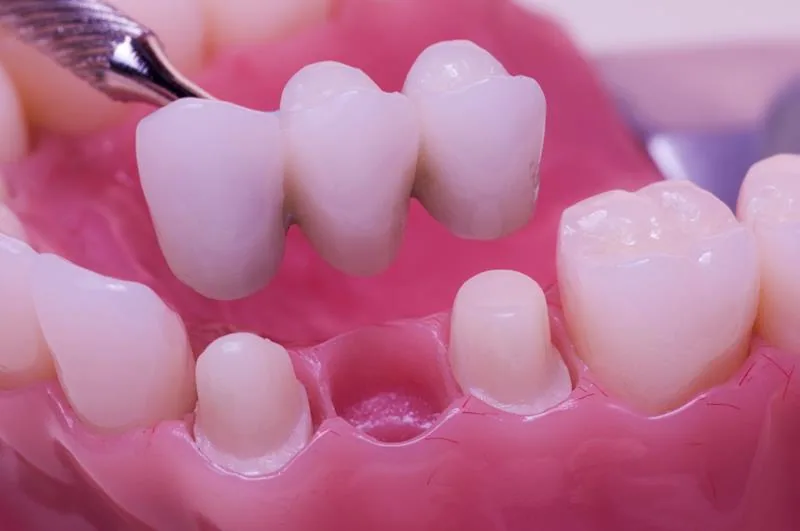
What’s included
- Replaces one or more missing teeth in a row
- Available in porcelain, gold and alloys
- Fixed or removable options
- Can be supported by natural teeth or implants
- Restores chewing and stops neighbouring teeth drifting
About Dental Bridges
Bridges can solve the issue of missing teeth. Similar to dentures, bridges replace gaps in your smile with artificial teeth. Bridges can be made from a variety of materials including porcelain, gold, and alloys. Bridges can be removable or fixed. Removable bridges can be taken out and cleaned by patients, whereas fixed bridges have to be removed by a dentist. Bridges can be implanted to the jaw or under the gums. With so many options, it is important to consult with your dentist about which type of bridge is best for you. You should always keep your current teeth healthy and strong, but a bridge can help if you do lose teeth.
Reasons to Replace a Missing Tooth
The visible reason is the gap itself, particularly toward the front of the mouth. The reasons you cannot see matter more. Teeth on either side of a space tilt into it over months and years, which changes how your bite meets and creates food traps that are hard to clean. The opposing tooth, with nothing to bite against, over-erupts out of its socket and can eventually be lost too. Chewing shifts to the other side, which loads those teeth and the jaw joint unevenly. The jawbone in the empty area, no longer stimulated by a tooth root, begins to resorb. And speech can change when front teeth are missing. A bridge addresses all of that at once.
Benefits of a Bridge
A bridge is fixed in place, so it does not move when you eat or speak and there is nothing to take out at night. For many people that alone decides it over a partial denture. It restores chewing on that side, which matters more than people expect for how comfortably they eat. It holds the neighbouring teeth in their correct positions and prevents the over-eruption of the tooth opposing the gap. Cosmetically, a well-made porcelain bridge is difficult to distinguish from natural teeth. And because it is cemented, adapting to it takes days rather than the weeks a removable appliance can take.
What to Expect
A conventional fixed bridge uses the teeth either side of the gap as supports, so those teeth are prepared much like they would be for crowns. A digital impression is taken with the iTero scanner and a temporary bridge is fitted while the laboratory makes the final one. At the second visit the permanent bridge is tried in, the fit and bite are checked, and it is cemented. Cleaning is the one thing that differs from natural teeth: because the artificial tooth is joined to its supports, you cannot floss between them normally and instead thread floss underneath using a floss threader or use an interdental brush or water flosser. We will show you how, and it takes about a minute a day. Done consistently, that is what determines whether the bridge lasts a decade or two.
Common Questions
Bridge or implant?
How long does a bridge last?
Will it look natural?
Is it uncomfortable to wear?
Do I have to replace the tooth at all?
Terms You May Hear
- Abutment
- A supporting tooth or implant that a bridge is anchored to at either end.
- Pontic
- The artificial tooth in the middle of a bridge, spanning the gap.
- Floss threader
- A small tool that carries floss underneath a bridge so you can clean beneath the pontic.
Related Services
Ready to Schedule Your Appointment?
Missing a tooth, or putting off deciding what to do about it? Call (630) 427-1800.