
Root Canal in Darien
Treatment that removes infection from inside a tooth and seals it, ending the pain and keeping a tooth that would otherwise have to come out.
A root canal has a worse reputation than it deserves. It is the treatment that stops the pain. The pain people associate with it is the infection they arrived with.
What’s included
- Relieves the pain of an infected or abscessed tooth
- Saves a tooth that would otherwise need extraction
- Performed in our own office by Dr. Ammar
- Done under local anaesthetic — you feel pressure, not pain
- Usually finished with a crown to protect the tooth
About Root Canal Treatment
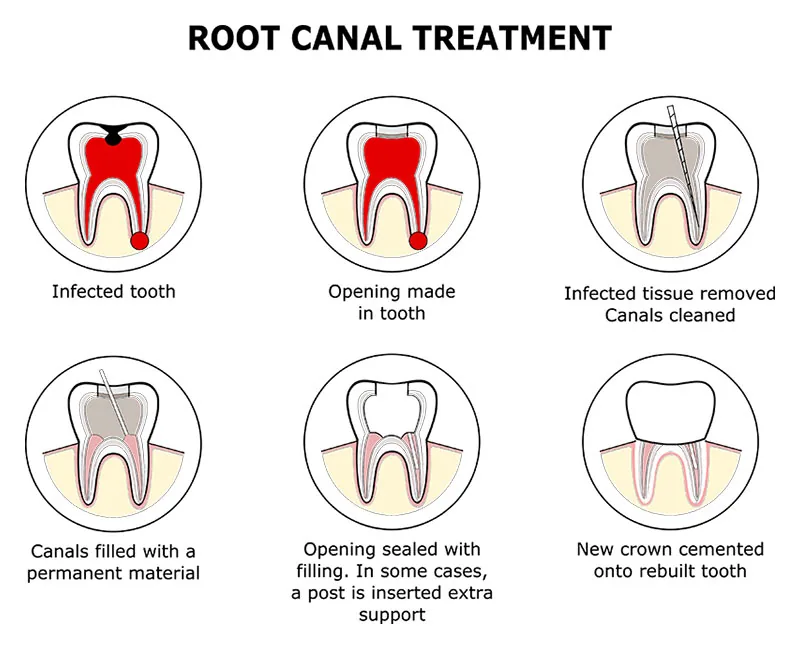
A root canal is a procedure used to repair and save a tooth that is badly decayed or becomes infected. Although normal tooth decay can become increasingly worse and eventually lead to a root canal, often times blunt trauma can cause the tooth to die as well. Your dentist will remove the dead nerve from the tooth and then seal it off to prevent another infection or abscess from forming around the tooth. If the nerve is not removed the infection will continue to climb deeper into your gums, often causing swelling, pain, and discomfort. Do not wait to see your dentist if you are experiencing any kind of discomfort.
Signs You May Need a Root Canal
Severe, throbbing toothache, particularly one that wakes you at night or that no longer responds to painkillers. Lingering pain after something hot or cold, where the ache continues for thirty seconds or more after the trigger is gone. Pain when biting or touching the tooth. A tooth that has darkened compared with its neighbours. Swelling or tenderness in the gum near the tooth, or a small pimple-like bump on the gum that may drain and taste bad. Swelling in the face or jaw. Sometimes there are no symptoms at all and it is found on an X-ray. A nerve can die quietly, especially after an old injury to the tooth.
Benefits of Root Canal Treatment
The alternative to a root canal is losing the tooth. Nothing replaces a natural tooth as well as the tooth itself: it is anchored in its own ligament, it feels normal, and it holds its neighbours in position. When a tooth is extracted the teeth around it drift, the opposing tooth over-erupts, and the bone in that spot begins to shrink, so a single extraction quietly becomes a bigger restorative problem years later. Treatment also stops the infection spreading into the jaw, which is the outcome that turns a dental problem into a medical one. And it ends the pain, usually the same day.
What to Expect
The tooth is numbed thoroughly, more so than for a filling, because infected tissue is harder to anaesthetise. A small opening is made, the dead nerve and infected tissue are cleaned out of the canals, and the space is disinfected, shaped and sealed. You feel pressure and vibration, not pain. Modern root canal treatment feels much like having a long filling done. Afterward the tooth is usually tender to bite on for a few days while the surrounding ligament settles, and over-the-counter painkillers handle it. Because a treated tooth has lost its internal blood supply it becomes more brittle, so a crown is normally recommended to stop it fracturing. That is a separate appointment once the tooth has settled.
Common Questions
Does a root canal hurt?
How many visits does it take?
Why do I need a crown afterward?
Could I just have the tooth pulled instead?
My tooth stopped hurting on its own. Am I fine?
Terms You May Hear
- Pulp
- The soft tissue inside a tooth containing the nerve and blood vessels. Root canal treatment removes it when it becomes infected or dies.
- Abscess
- A pocket of infection at the root tip, which can cause swelling, a bad taste, and a bump on the gum.
- Canal
- The narrow channel inside each root that houses the pulp. Front teeth usually have one; molars often have three or four.
Related Services
Ready to Schedule Your Appointment?
In pain now? Call (630) 427-1800 and tell us it is urgent. Do not wait to see if it settles.