
Invisalign in Darien
Clear, removable aligner trays that move teeth gradually, with no brackets to tighten and very little disruption to how you look day to day.
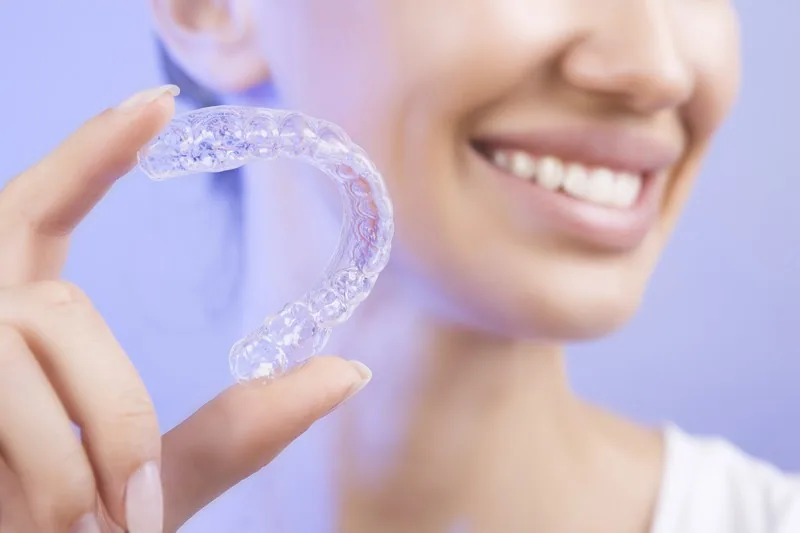
Invisalign moves teeth with a sequence of clear trays rather than fixed brackets and wires. Most people you speak to will not notice you are wearing them.
What’s included
- B&R Dentists is Invisalign certified
- Custom trays designed specifically for you
- No brackets to tighten — trays change roughly every two weeks
- Removable for eating, brushing and flossing
- iTero Outcome Simulator previews your likely result
About Invisalign
Invisalign® involves a series of custom trays designed specifically for you and the plan your dentist or orthodontist creates to move your teeth. The trays are made from a smooth plastic that covers your teeth and gradually moves them into place. Unlike braces, there are no brackets to tighten. Instead, you use different trays as your teeth move into position. Typically trays are changed every two weeks. Invisalign® is a popular choice for straightening because it involves minimal disturbance to your daily routine or appearance. The trays are difficult to see and most people will have no idea you are wearing them. We are proud to be Invisalign (invisible braces) certified.
What Invisalign Can Correct
Crowded teeth that overlap and are difficult to clean between. Gaps and spacing. Teeth that have shifted over the years, including relapse after braces in your teens because a retainer was not worn. Mild to moderate bite problems: overbite, underbite, crossbite and open bite. Teeth that are rotated or tipped. Adults very often come because of the cleaning problem rather than the appearance: crowded teeth trap plaque in places a brush cannot reach, so they decay and develop gum problems repeatedly no matter how carefully you brush. Severe skeletal bite discrepancies, badly impacted teeth and some complex rotations are better treated with fixed braces, and we will tell you if that is your situation rather than starting something that will not finish the job.
Benefits of Clear Aligners
The practical benefits come from the trays being removable. You take them out to eat, so nothing is off the menu and there are no brackets for food to catch in. You take them out to brush and floss normally, which is a genuine advantage. Oral hygiene during fixed brace treatment is difficult and decalcification marks around brackets are a common regret. There is no emergency appointment for a broken bracket or a wire poking your cheek. And appearance matters to adults in a way it does not to teenagers: the trays are difficult to see, so treatment does not have to be a conversation at work. The trade-off is discipline. Aligners only work while they are in your mouth, and the required wear is 20 to 22 hours a day. People who cannot commit to that get slower, worse results than they would have with fixed braces.
What to Expect
It starts with an assessment of whether aligners suit your case, plus X-rays and a digital scan with the iTero. Because that scan is a 3D model, we can run the Invisalign Outcome Simulator and show you on screen what your teeth are projected to look like at the end, before you commit to anything. A treatment plan is then designed and your series of trays is manufactured. You wear each set for around two weeks, all day and night except when eating or cleaning your teeth, then move to the next. Small tooth-coloured attachments are often bonded to some teeth to give the trays something to grip; they come off at the end. Expect pressure and mild soreness for a day or two with each new tray. That is the tooth moving, and it is a good sign. Check-ups are typically every six to eight weeks. When the teeth are in position you move to retainers, and wearing them is not optional: teeth drift back toward where they started, and retention is what makes the result permanent.
Common Questions
How long does treatment take?
How many hours a day do I have to wear them?
Can I eat and drink with them in?
Will it affect my speech?
Invisalign or traditional braces?
Terms You May Hear
- Aligner
- One clear tray in the series. Each moves the teeth a fraction of a millimetre before you progress to the next.
- Attachment
- A small tooth-coloured bump bonded to a tooth so the aligner can grip and apply force in a specific direction. Removed at the end.
- Retainer
- Worn after treatment to hold teeth in their new position. Without it, teeth relapse toward where they began.
Related Services
Ready to Schedule Your Appointment?
Curious what your teeth could look like? Call (630) 427-1800 and ask about the iTero Outcome Simulator.