
Fillings in Darien
Tooth-coloured composite fillings that repair cavities and cracks and blend into the tooth, so a repair does not announce itself when you smile.
A filling repairs a tooth that decay or a crack has damaged, before the damage reaches the nerve. Done early it is a short, routine appointment, which is the entire argument for not waiting.
What’s included
- Composite resin matched to your natural tooth colour
- Repairs cavities plus cracked and broken teeth
- Local anaesthetic so the appointment is comfortable
- Usually finished in a single visit
- Polished afterward so it feels smooth to your tongue
About Dental Fillings
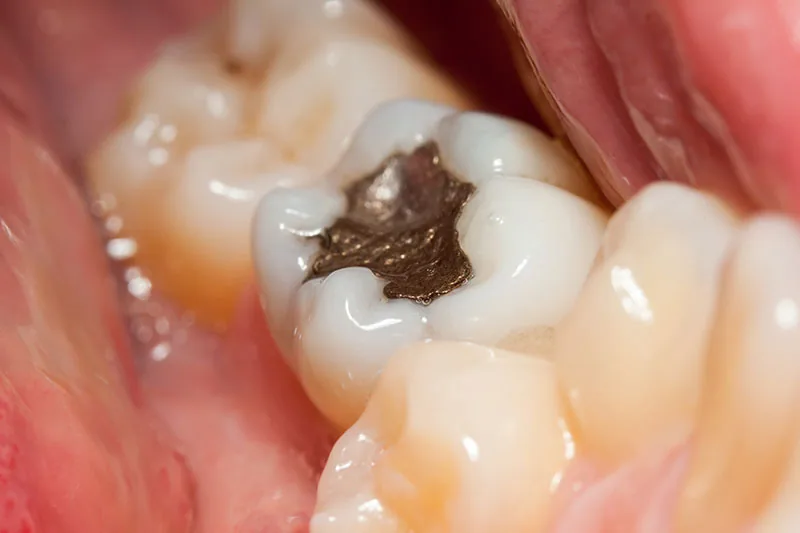
Dental fillings are used to fill cavities and repair cracked or broken teeth. Fillings can be done with gold, porcelain, or silver amalgam, but is most commonly done with materials called composite resin fillings that are designed to match the color of your teeth. Additional steps are required for tooth-colored fillings because it requires multiple layers and a special light to dry and harden the area around the filling. To fill a tooth, a local anesthetic is applied to numb the area around the tooth. Your dentist will prepare the space for the filling by cleaning the cavity of bacteria and debris. In some cases, your dentist may apply a liner for your tooth called a glass ionomer to help protect the tooth and nerve before the tooth is filled. After your filling is complete, most dentists will polish the tooth to make it feel smooth and natural.
Reasons You May Need a Filling
The obvious sign is a cavity found at a check-up, often before you have felt anything at all. Other reasons to come in: a tooth that has become sensitive to sweet, hot or cold; a rough or sharp edge your tongue keeps finding; food that consistently wedges between the same two teeth; a visible dark spot or hole; an old filling that has chipped, worn down or fallen out; or a tooth you chipped on something hard. Pain is not required. By the time a cavity hurts, it is usually close to the nerve, and the treatment gets bigger.
Benefits of Treating Decay Early
Decay does not stop or heal. It moves through the enamel, then the softer dentine underneath, and once it reaches the nerve the options change from a filling to a root canal and a crown: a longer appointment at several times the cost. Filling a tooth early keeps the maximum amount of your own tooth structure, which is the thing that actually determines how long that tooth lasts. Composite fillings also bond to the tooth rather than just sitting in it, so less healthy enamel has to be removed than with older materials, and the result is invisible in normal conversation.
What to Expect
The area is numbed, the decay is cleaned out, and the composite is placed in thin layers, each set with a curing light. Your dentist then shapes it to match the tooth's contours and checks your bite so nothing feels high when you close. The whole thing usually takes twenty to forty minutes for a single tooth. You can eat as soon as the numbness wears off. Composite is fully hardened before you leave. Mild sensitivity to cold for a few days is normal; sharp pain when biting is not, so call us and we will adjust it. The procedure can vary in time and cost depending on the extent of the damage to the tooth.
Common Questions
Will I need a needle?
How long do composite fillings last?
Can I choose silver amalgam instead?
Why does my tooth feel sensitive after a filling?
Can a cavity be reversed without a filling?
Terms You May Hear
- Composite resin
- The tooth-coloured filling material. It is placed in layers, hardened with a light, and bonds directly to the tooth.
- Glass ionomer liner
- A protective layer sometimes placed under a filling to shield the tooth and nerve when the cavity is deep.
- Caries
- The clinical name for tooth decay: the bacterial process that dissolves enamel and creates a cavity.
Related Services
Ready to Schedule Your Appointment?
Think you have a cavity, or noticed a tooth catching on your tongue? Call (630) 427-1800.