
Most people arrive having already decided they want Invisalign, and usually for a reason that is perfectly valid: they do not want to spend a year or more with visible brackets. That is a real consideration, particularly for adults. But it is not the only one, and it is worth understanding what actually separates the two options before committing.
What clear aligners do well
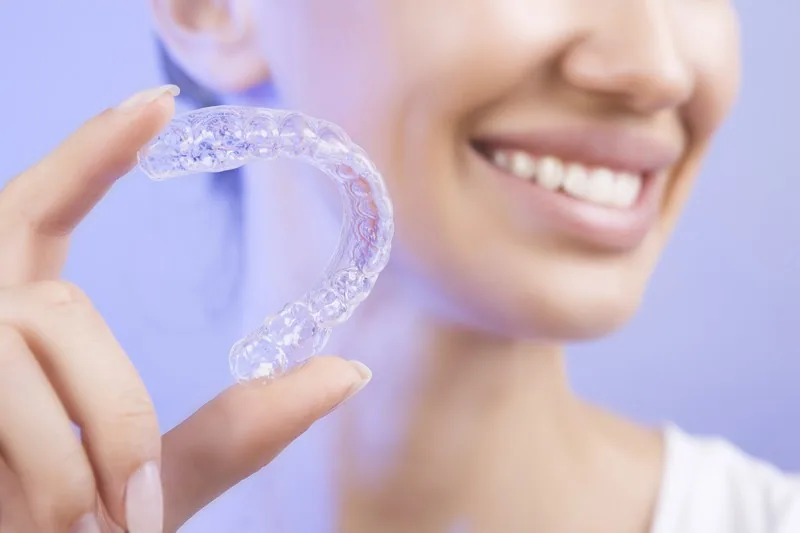
The practical advantages come from the trays being removable.
- Nothing is off the menu. You take them out to eat, so there are no brackets for food to catch in and no list of forbidden foods.
- You can clean your teeth normally. This is a bigger deal than it sounds. Oral hygiene during fixed brace treatment is genuinely difficult, and permanent white decalcification marks around where brackets were is a common regret.
- No emergency appointments for a broken bracket or a wire poking your cheek.
- They are difficult to see, so treatment does not have to be a conversation at work.
The catch nobody mentions
Aligners only work while they are in your mouth. The requirement is 20 to 22 hours a day, essentially everything except eating and cleaning your teeth.
That sounds manageable until you are three months in, eating out twice a week, and taking them out for a coffee. People who cannot commit to the wear time get slower and worse results than they would have had with fixed braces, because braces do not offer the option of not wearing them. This is the single honest question to ask yourself before choosing.
What fixed braces still do better
Braces remain more predictable for severe crowding, significant bite corrections, large rotations, and cases needing real root movement rather than tipping. If your case is in that category, aligners can start the job and not finish it, which means longer treatment and more expense, not less.
We offer both, so the recommendation you get here is based on what your teeth need rather than on what we happen to provide.
The reason adults come in that has nothing to do with appearance
A significant number of our adult orthodontic patients are not primarily bothered by how their teeth look. They are bothered by the fact that the same two teeth keep getting cavities no matter how carefully they brush.
Crowded and overlapping teeth trap plaque in places a toothbrush physically cannot reach. You can be doing everything right and still lose that fight. Straightening the teeth makes them cleanable, and the decay and gum problems in those spots often stop recurring.
Similarly, a bite where the force is distributed unevenly wears, chips and recedes over decades. Treating that at forty is still worthwhile, not just at fourteen.
Seeing the result before you commit
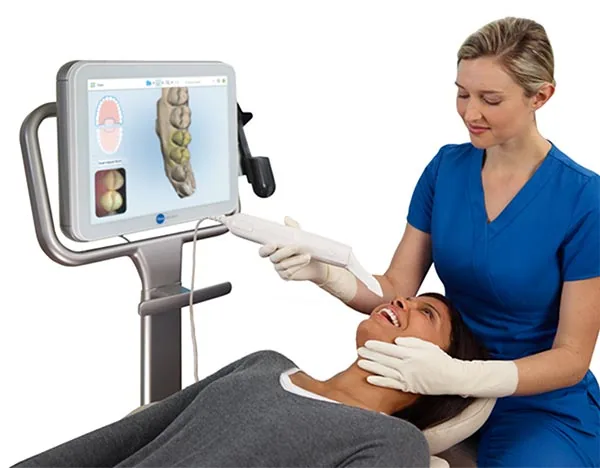
Because we take a digital scan with the iTero rather than a putty impression, we can run the Invisalign Outcome Simulator from that same scan and show you a projection of what your teeth are expected to look like at the end, side by side with how they look now, on screen, before you have agreed to anything.
Whichever you choose: wear the retainer
Teeth drift toward their original positions for your whole life. Relapse after successful orthodontic treatment is almost always a retainer that stopped being worn. The wear reduces over time to a few nights a week, but it does not stop.
Want to know which would suit your case? Call (630) 427-1800 and ask about an orthodontic assessment.