

The most common thing people conclude when their gums bleed is that they are brushing or flossing too hard, and should ease off. That is almost exactly backwards.
Healthy gums do not bleed. Not when you brush them, not when you floss them. Bleeding is inflammation, and inflammation is a response to bacteria sitting along the gumline.
What is actually happening
Plaque — the soft, sticky bacterial film that forms on teeth constantly — irritates the gum where it meets the tooth. The gum responds by increasing blood flow to the area, which is why it looks red and puffy rather than firm and pink, and why it bleeds when disturbed.
At this stage it is called gingivitis, and the important thing about gingivitis is that it is completely reversible. A professional cleaning removes the hardened deposits your toothbrush cannot, consistent home care keeps the soft plaque from rebuilding, and the gums return to normal within a couple of weeks.
What happens if it carries on
Plaque that stays put hardens into tartar, which can no longer be brushed away. Tartar below the gumline pushes the gum away from the tooth, creating a pocket. Bacteria live in that pocket, beyond the reach of any toothbrush, and the body's response to that infection begins destroying the bone that holds the tooth.
That is periodontitis, and here is the part that matters: the bone does not grow back. Treatment can stop further loss, but it cannot undo what has gone. Gum disease is the leading cause of tooth loss in adults, and it gets there quietly. It is typically painless until it is advanced, which is exactly why it gets missed.
Signs worth acting on
- Gums that bleed when you brush or floss
- Gums that look red, swollen or shiny rather than firm and pink
- Persistent bad breath or a bad taste that brushing does not fix
- Gums pulling away from the teeth, so teeth look longer than they used to
- Sensitivity at the gumline where root surface has become exposed
- Teeth that feel loose, or a bite that has started to feel different
One counterintuitive note: smokers often bleed less, not more. Nicotine constricts the blood vessels in the gums, which can mask the most obvious warning sign while the disease progresses underneath.
So should I stop flossing?
No. Keep going. If bleeding is caused by inflammation, and the inflammation is caused by plaque you are now removing, then continuing is what resolves it. Most people find the bleeding reduces noticeably within one to two weeks of flossing consistently. If it does not, that is a clear signal to have it looked at properly, because it suggests there is tartar below the gumline that home care cannot reach.
What treatment involves
First we measure. A small probe records the depth of the space between each tooth and gum. One to three millimetres is healthy, four and above is a pocket. Those numbers, with X-rays showing bone level, tell us the stage and give us something to compare against at future visits.
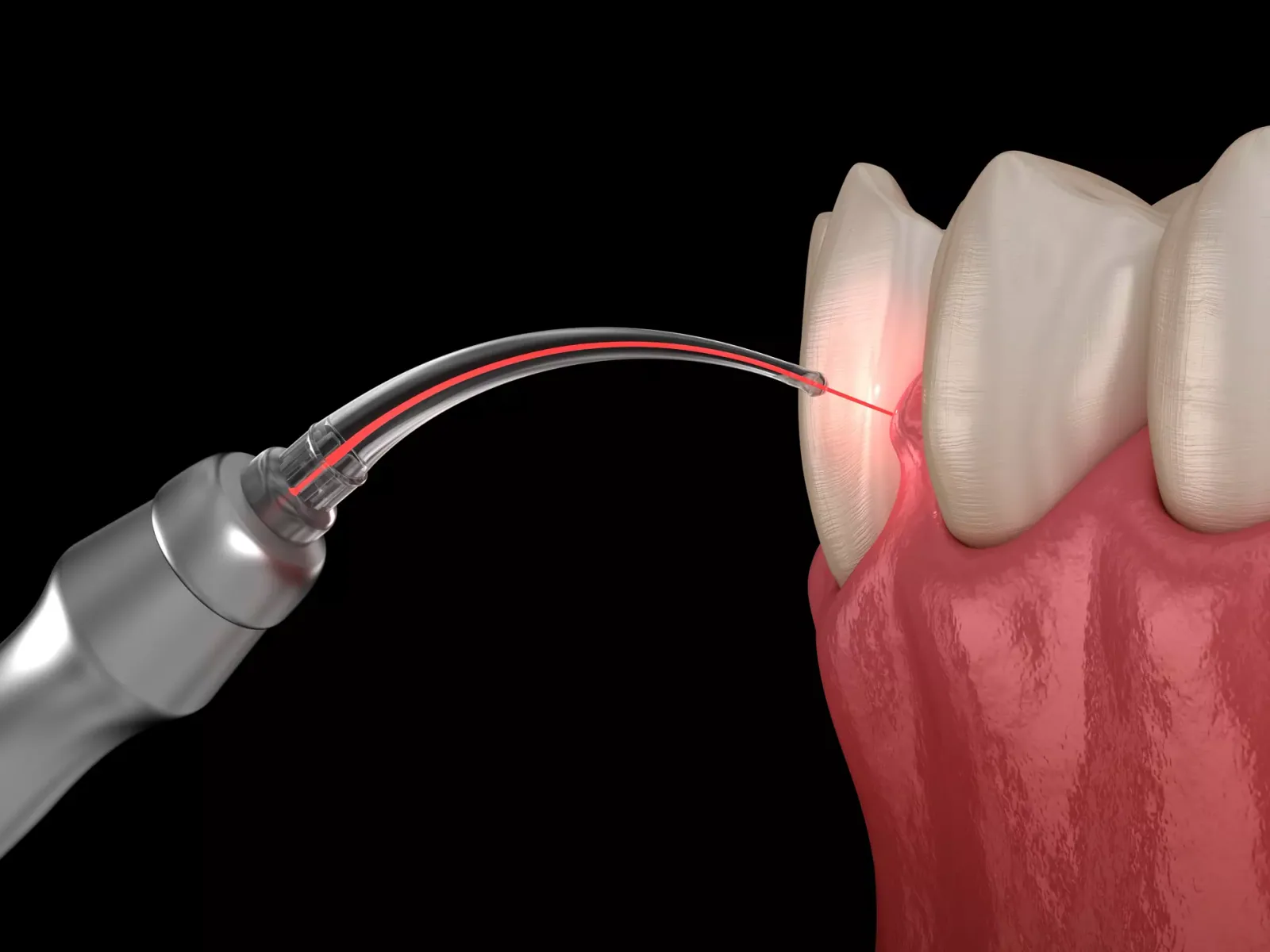
If it is gingivitis, a cleaning and better home care handle it. If pockets have formed, scaling and root planing cleans the root surfaces below the gumline under local anaesthetic so the gum can reattach, sometimes with Arestin: an antibiotic placed directly into deeper pockets.
Gums bleeding? Call (630) 427-1800. This is one where timing genuinely changes the outcome.